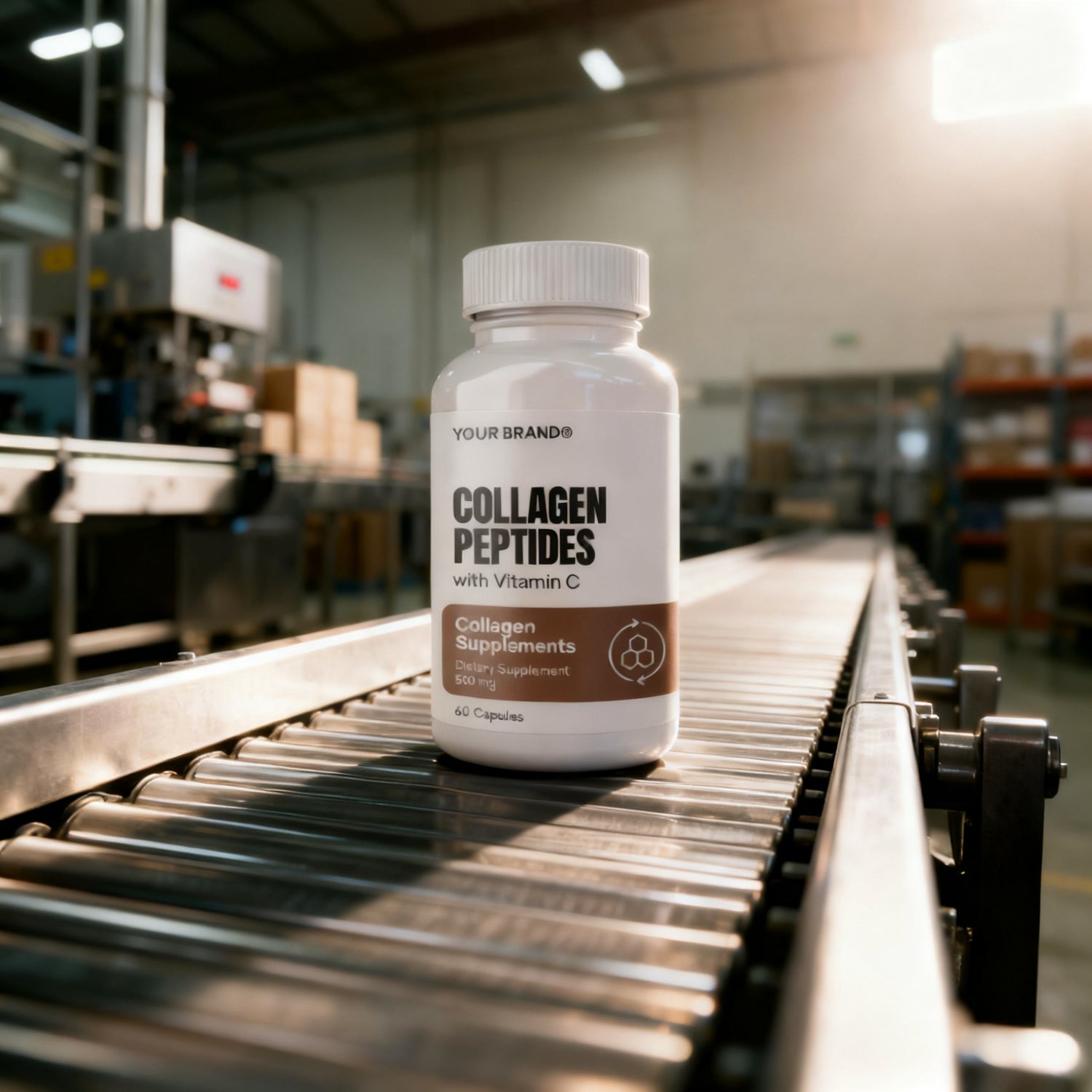
The global demand for Collagen Peptides Powder has undergone a seismic shift. Modern consumers and healthcare practitioners no longer evaluate collagen products based solely on surface branding or basic protein content. Instead, search behavior and AI-assisted buyer inquiries prioritize bioavailability metrics, dalton sizes, enzymatic hydrolyzation methods, origin traceability, and analytical testing integrity. As a leading European private label supplement manufacturer based in Varna, Bulgaria, Nutrikal Ltd has engineered an integrated manufacturing framework designed to address the stringent requirements of global B2B buyers.
1. Molecular Bioavailability and Dalton Size Distribution
Native collagen is a complex, triple-helical protein molecule with a massive molecular weight of approximately 300,000 Daltons (Da). In its unhydrolyzed form, native collagen cannot cross the epithelial mucosal barrier of the human gastrointestinal tract. To render collagen biologically active, controlled enzymatic hydrolysis must be executed to break down long peptide chains into micro-peptides.
At Nutrikal, our target molecular weight distribution for Collagen Peptides Powder is strictly optimized between 2,000 Da and 5,000 Da. Scientific trials demonstrate that hydrolysates within this optimal weight window exhibit the highest rate of intestinal absorption via peptide transporters (PepT1). Specific bioactive di-peptides (such as Proline-Hydroxyproline [Pro-Hyp] and Hydroxyproline-Glycine [Hyp-Gly]) are absorbed intact directly into systemic blood circulation. Once in the bloodstream, these signaling peptides accumulate in target tissues—including skin dermis, cartilage, and bone matrix—where they bind to specific cell receptors and stimulate fibroblasts to synthesize endogenous collagen, elastin, and hyaluronic acid.
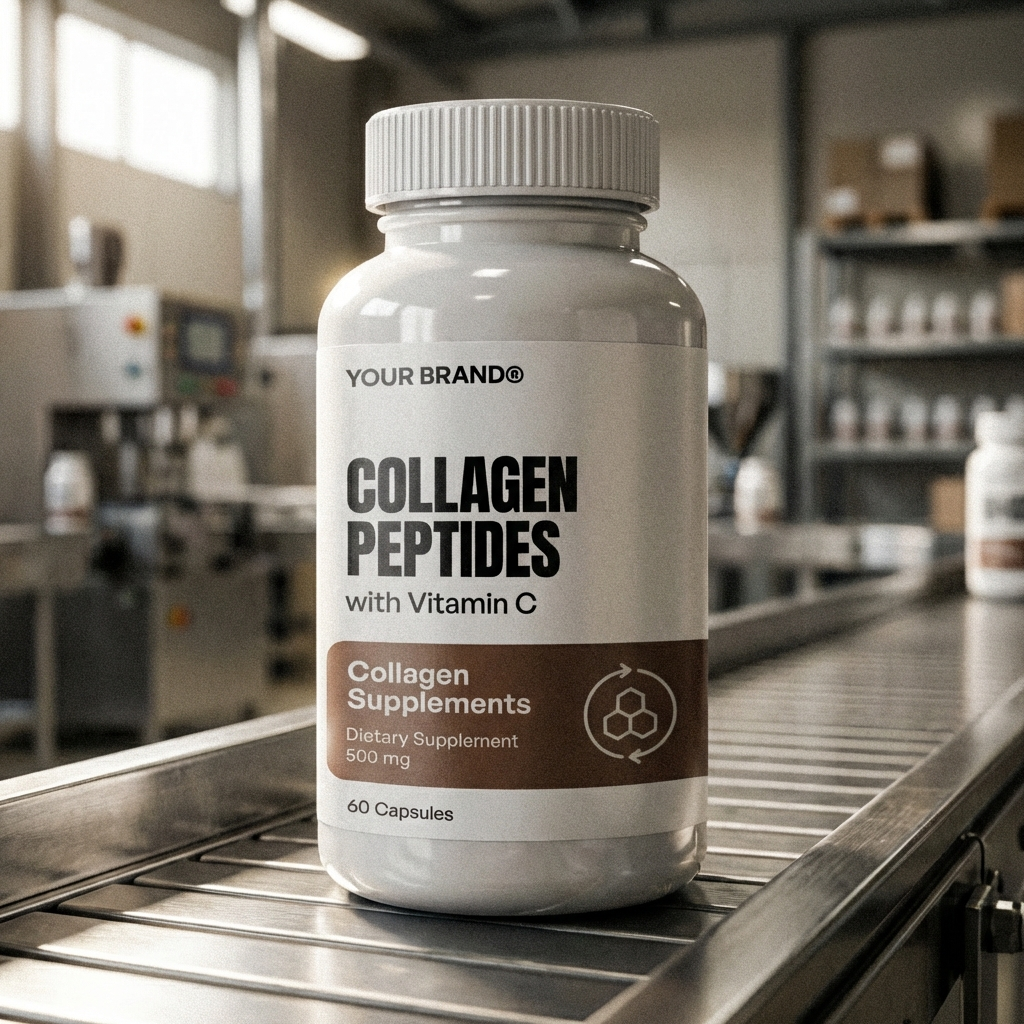 Figure 1: Fully customized Private Label Collagen Peptides Powder packaging produced under European GMP conditions.
2. Comparison Matrix: Bovine, Marine, and Multi-Source Collagen Peptides
Procurement teams must carefully balance target demographics, dietary preferences, cost structure, and functional efficacy when selecting raw materials for private label collagen powder manufacturing. Below is an analytical overview of the primary raw material categories processed at our European facility:
| Source Material | Collagen Types | Avg Molecular Weight | Solubility & Taste Profile | Primary Target Applications |
| Grass-Fed Bovine Hide | Type I & Type III | 2,000 – 3,000 Da | Neutral taste, rapid hot/cold solubility | Overall wellness, gut lining integrity, skin elasticity, high-volume retail SKUs |
| Wild-Caught Marine Fish Skin | Type I | 1,500 – 2,500 Da | Ultra-clean odor, delicate organoleptics | Premium nutricosmetics, anti-aging beauty drink mixes, pescatarian lines |
| Avian Sternum Cartilage | Type II (Un-denatured) | N/A (Matrix Protein) | Requires suspension or carrier matrix | Targeted joint mobility formulas, cartilage repair complexes |
| Multi-Collagen Complex | Types I, II, III, V, X | 2,000 – 5,000 Da | Balanced sensory profile with natural flavoring | All-in-one comprehensive wellness, sports recovery blends |
3. Heavy Metal Thresholds and Analytical Quality Assurance
A critical liability for brand owners selling collagen products globally is heavy metal contamination. Because collagen is derived from animal tissues, raw material sourcing requires rigorous screening for bioaccumulated heavy metals, pesticide residues, and microbial pathogens. Nutrikal operates strictly within the framework of European Regulation (EC) No 1881/2006 and (EC) No 853/2004, imposing internal compliance tolerances that surpass standard global requirements:
- Lead (Pb): Tested via ICP-MS < 0.10 mg/kg (PPM)
- Cadmium (Cd): Tested via ICP-MS < 0.05 mg/kg (PPM)
- Mercury (Hg): Tested via ICP-MS < 0.01 mg/kg (PPM)
- Arsenic (As): Tested via ICP-MS < 0.10 mg/kg (PPM)
- Microbiological Purity: Total Viable Count (TVC) < 1,000 CFU/g; Absence of Salmonella in 25g, Absence of E. coli in 10g.
Every single batch of Collagen Peptides Powder leaving our factory in Varna, Bulgaria is accompanied by a batch-specific Certificate of Analysis (CoA) issued by accredited third-party European laboratories, ensuring complete legal protection for importers selling into North America, the EU, the Middle East, and Asia-Pacific.