Explore our top-tier private label formulations and bulk active material systems engineered under international cGMP, ISO, and HACCP compliance frameworks.
Biotin, also designated chemically as Hexahydro-2-oxo-1H-thieno[3,4-d]imidazole-4-pentanoic acid (CAS Number: 58-85-5), is a water-soluble B-complex vitamin (Vitamin B7 or Vitamin H). In commercial global supply chains, procuring pure Biotin powder for dietary supplements, pharmaceuticals, and cosmeceuticals requires stringent technical scrutiny. Only the natural stereoisomer—D-(+)-Biotin—exhibits full biological activity in human metabolic pathways, functioning as an essential coenzyme for five carboxylases involved in fatty acid synthesis, gluconeogenesis, and amino acid catabolism.
When evaluating qualified biotin powder factories and suppliers, brand owners and procurement leads must navigate distinct physical concentrations and carrier matrix selections:
High-potency Active Pharmaceutical Ingredient (API) grade used primarily in high-shear automated encapsulation, parenterals, and premix manufacturing. Requires precise micro-dosing and de-agglomeration handling due to extreme potency (microgram-level clinical targets).
Homogenized spray-dried or dry-blended triturations utilizing carriers like Dicalcium Phosphate (DCP), Maltodextrin, or Microcrystalline Cellulose (MCC). Engineered to prevent particle segregation in direct-compression tablets and hard-gel capsules.
Advanced delivery format utilizing lipid-bilayer or polymer coating to shield active D-Biotin against stomach acid gastric breakdown, ensuring enhanced cellular absorption and gastrointestinal tolerance in premium beauty-from-within formulas.
| Grade / Technical Variant | Assay Specifications (HPLC) | Mesh Size / Particle Range | Primary Industrial Application | Compliance & Pharmacopeia |
|---|---|---|---|---|
| Pure Crystalline D-Biotin | 98.5% – 101.0% | 80 Mesh (100% through 180 µm) | Premix Compounding, API Injections | USP / EP / BP / FCC Standard |
| Biotin 1% Food Grade (DCP Carrier) | 1.0% – 1.15% | 100 Mesh (Flowable Granules) | Direct Compression Tablets, Hard Capsules | cGMP, Non-GMO, Halal, Kosher |
| Biotin 1% Water Soluble (Maltodextrin) | 1.0% – 1.08% | 120 Mesh Fine Powder | Beverage Mixes, Effervescent Powders | EFSA Novel Food Compliant / Food Grade |
| Cold-Water Dispersible (CWD) Biotin | 2.0% – 5.0% Microencapsulated | 200 Mesh Ultrafine | Clear Functional Drinks, Liquid Sachets | Clean Label, ISO 22000 Certified |
As consumer demand shifts toward clean-label beauty supplements and clinical nutricosmetics, purchasing managers must adapt to evolving manufacturing paradigm shifts.
Traditional multi-step chemical synthesis routes (Sternbach or Goldberg synthesis) rely on petrochemical precursors and heavy metal catalysts. The industry is rapidly adopting enzymatic biotransformation and engineered microbial fermentation (using genetically optimized E. coli or Bacillus subtilis strains). This eco-friendly bioprocess yields lower carbon footprints, eliminates toxic chemical residues, and fulfills strict European Union carbon-neutral sourcing directives.
Stand-alone biotin single-ingredient products are yielding market share to tri-active nutricosmetic matrices. Contract manufacturers are now tasked with co-processing D-Biotin alongside Hydrolyzed Marine Collagen Peptides, Keratin Hydrolysates, Hyaluronic Acid, and Zinc Picolinate. Ensuring particle size uniformity across multi-particulate systems is critical to prevent blend segregation during high-speed encapsulation.
Global regulatory authorities (FDA, EFSA, NMPA) have intensified batch-level verification requirements. Modern Certificate of Analysis (CoA) audits require sub-ppm testing for heavy metals: Lead (Pb < 0.5 ppm), Arsenic (As < 0.5 ppm), Cadmium (Cd < 0.5 ppm), and Mercury (Hg < 0.1 ppm), tested strictly via Inductively Coupled Plasma Mass Spectrometry (ICP-MS), alongside residual solvent screens under USP <467> Class 1 and Class 2 guidelines.
To mitigate cross-border logistics bottlenecks, international brand owners are partnering with established manufacturers operating certified European and Asian facility hubs. Consolidating raw material procurement, micro-encapsulation, and packaging under one quality umbrella reduces lead times from 12 weeks down to 3–5 weeks.
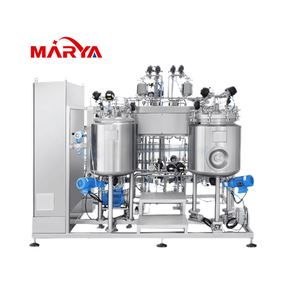
Combining Marya Professional Formulation Systems with certified European contract manufacturing capabilities to deliver uncompromised quality and scale.
Selecting a reliable Biotin supplier requires more than checking price points per kilogram. Our integrated global facility network provides end-to-end quality risk management (ICH Q9) and strict adherence to good manufacturing practices. From raw material intake identification to final palletized delivery, every production batch passes rigid quality gates.
Achieving optimal bioavailability and shelf-life stability across diverse finished product formats.
Biotin exhibits good thermal stability up to 100°C during brief cooking cycles in pectin or gelatin starchless depositing processes. However, pH levels below 3.0 combined with high humidity can cause gradual activity loss. Our R&D team utilizes specialized overage protocols (5%–10%) to guarantee label claim verification across a 24-month shelf life.
Because active biotin is typically dosed between 300 µg to 10,000 µg (10 mg) per serving, blending pure D-Biotin directly into bulk protein or electrolyte powders without pre-dilution creates extreme risk of potencies variance. We employ geometric pre-blending using 1% triturations to guarantee uniform Content Uniformity (USP <905>).
Pure D-Biotin has limited solubility in cold water (approx. 22 mg/100 mL at 25°C). For instant beverage mix sachets or clear liquid shots, our spray-dried maltodextrin-bound Cold-Water Dispersible (CWD) biotin variants dissolve in under 30 seconds without cloudiness or sediment precipitation.
Detailed technical answers to key questions raised during supplier qualification and purchasing audits.
D-Biotin (d-stereoisomer) is the biologically active natural form recognized by the human body and authorized for food and supplement use worldwide. DL-Biotin is a racemic synthetic mixture containing both D and L forms; L-biotin possesses no biological activity and is prohibited in food supplements in most regulatory jurisdictions (including EU EFSA and US FDA). Biotin Trituration is pure D-Biotin diluted to 1% or 10% on a food-grade carrier (such as DCP or Maltodextrin) to enable accurate dosing during commercial encapsulation and tableting.
Qualified suppliers must provide a comprehensive documentation package for each lot, including: (1) Batch Certificate of Analysis (CoA) with HPLC assay testing; (2) Heavy Metal analysis by ICP-MS (Pb, As, Cd, Hg); (3) Microbiological test panel (Total Plate Count, Yeast & Mold, E. coli, Salmonella); (4) Residual Solvent compliance certificate (USP <467>); (5) Non-GMO & Allergen Statements; and (6) BSE/TSE-Free statement.
Pure D-Biotin and 1% Biotin powders are typically packaged in 25 kg fiber drums lined with double food-grade polyethylene inner bags, often vacuum-sealed with desiccants or inert nitrogen flushing to prevent moisture absorption. Stored under cool, dry conditions (<25°C, relative humidity <60%) away from direct light, bulk biotin powder maintains a re-test shelf life of 36 months from the date of manufacture.
Biotin is chemically compatible with most vitamins, minerals, and proteins. In beauty-from-within formulas combining Hydrolyzed Collagen Peptides and Vitamin C (Ascorbic Acid), Biotin remains stable across standard storage conditions. However, when formulating high-moisture functional liquids or gummies, Vitamin C oxidation can create acidic degradation products; utilizing micro-encapsulated Biotin prevents active potencies loss over time.
Yes. Our manufacturing infrastructure supports flexible low MOQs starting from 500 units for stock formulations (such as high-potency Biotin capsules or gummy complexes). For fully customized OEM/ODM formulas involving unique active combinations, custom flavoring systems, or novel packaging formats, production scale-up is tailored to your brand's growth strategy.
For standard private label stock formulas with ready-to-print artwork, lead times range between 3 to 5 weeks from label approval. Custom formulations requiring specialized raw material sourcing, flavor matching, pilot batch stability trials, and custom packaging printing typically require 6 to 8 weeks.
Connect directly with our technical formulation team and international procurement specialists. Gain instant access to batch Certificates of Analysis, stability data, carrier customization options, and competitive tier-one factory pricing.
