Market-ready, fully documented dietary supplements available for private label branding and bulk export.
The global dietary supplement marketplace has undergone a fundamental structural transformation. Modern brand owners, pharmaceutical distributors, and cross-border e-commerce networks no longer evaluate Custom OEM Supplement OEM Manufacturers & Exporters purely on unit pricing. Instead, strategic procurement managers evaluate prospective contract manufacturing partners based on regulatory risk mitigation, analytical transparency, batch-to-batch homogeneity, and supply chain scalability.
Operating out of state-of-the-art facility hubs—such as our flagship European processing plant in Varna, Bulgaria—certified contract manufacturers bridge the gap between complex biochemical formulation and scalable consumer packaging. Navigating stringent international regulatory frameworks requires a manufacturing partner with deep institutional expertise in EU Food Safety Authorities (EFSA) guidance, US FDA cGMP (21 CFR Part 111) compliance, and Codex Alimentarius guidelines.
Core Manufacturing Benchmark: Fully accredited facilities operate under integrated Good Manufacturing Practice (GMP), Hazard Analysis Critical Control Point (HACCP), and ISO 22000 quality management systems. Every production run undergoes rigorous identity, purity, strength, and composition testing.
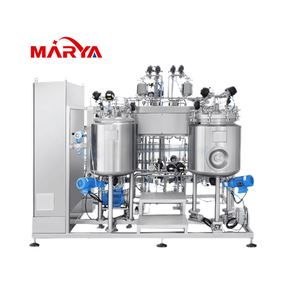
Commercial success in contemporary nutraceutical export relies heavily on delivery system diversification. A single-format facility creates operational friction for brands scaling across multiple product categories. Advanced OEM facilities integrate versatile solid-dose, liquid, and confectionery manufacturing suites under one roof:
Standardized workflows designed to minimize regulatory delays and maximize brand equity.
In-house regulatory affairs teams verify formulations against EU Novel Food rules, permitted mineral forms, and Regulation (EU) 1169/2011 labeling standards to ensure frictionless clearance across 30+ export destinations.
Flexible batch sizing starting from 500 units for stock private-label formulations up to multi-million unit contract runs. Brands can validate high-growth market niches without binding excessive working capital.
Every single batch is accompanied by a full Certificate of Analysis (CoA), verifying heavy metals (ICP-MS), microbiological screen (USP/EP standards), and active ingredient potency via High-Performance Liquid Chromatography (HPLC).
To assist procurement specialists in selecting optimal production lines, the matrix below details technical thresholds, standard MOQs, and typical lead times across key nutraceutical categories:
| Dosage Form | Standard Packaging | Minimum Order Quantity (MOQ) | Quality Control Protocol | Production Lead Time |
|---|---|---|---|---|
| Two-Piece Capsules | PET / HDPE Bottles, Blister Packs | 500 Bottles (Stock) / 50k Caps (Custom) | Disintegration, HPLC Potency, Micro-Bio Clear | 3 – 4 Weeks |
| Functional Gummies | Wide-Mouth Bottles, Pouches | 1,000 Bottles / Custom Molds Available | Brix Level, Active Stability, Texture Analysis | 4 – 5 Weeks |
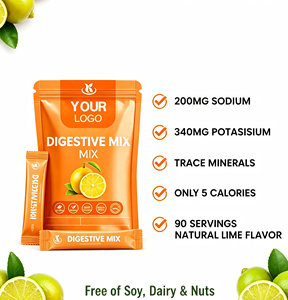
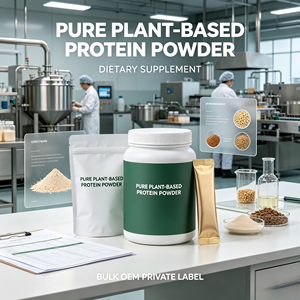
| Powder Blends | Jars, Stand-Up Doypacks, Sachets | 500 Jars / 10,000 Single-Serve Sachets | Bulk Density, Solubility, Particle Size (Mesh) | 3 – 5 Weeks |
| Botanical Extracts | Bulk Drums, Aluminum Bags | 25 kg Drums / Bulk Export Grade | Marker Compound Assay, Solvent Residue Screen | 2 – 3 Weeks |
As the global nutraceutical market accelerates toward an estimated $300+ billion valuation by 2030, procurement strategy among leading distributors and brand owners has evolved. Buying decisions are no longer driven purely by unit cost; strategic buyers prioritize risk reduction, compliance automation, and formula differentiation.
Consumer scrutiny regarding synthetic fillers has forced a major technical transition on manufacturing floors. Traditional tableting and encapsulating lubricants like magnesium stearate, silicon dioxide, and titanium dioxide are being rapidly phased out. Leading OEM supplement manufacturers have invested in clean-label excipients, substituting synthetic binders with organic rice hull concentrates, tapioca maltodextrin, and natural bamboo silica. Formulating without synthetic flow agents requires higher precision during milling and blending, demanding advanced climate-controlled HVAC environments to prevent hygroscopic clumping.
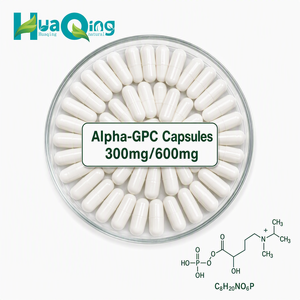
Bioavailability has become the principal marketing battleground for premium supplement brands. Standard raw materials often suffer from poor gastrointestinal stability or minimal systemic absorption. OEM suppliers are responding by integrating lipid-based liposomal carriers and spray-dried micro-encapsulation technologies. Micro-encapsulated active ingredients—such as liposomal Vitamin C, bio-enhanced Curcumin, and stabilized Alpha-GPC—protect delicate compounds from enzymatic degradation during stomach transit, delivering vastly superior plasma concentration curves.
International exporters face stringent packaging regulations, particularly within the European Union (such as updated directives on single-use plastics and packaging waste). Procurement leads now require OEM manufacturers to offer eco-friendly primary and secondary packaging options. Preferred packaging configurations include 100% recyclable post-consumer recycled (PCR) HDPE bottles, compostable flexible film doypacks, and lightweight aluminum containers that reduce international freight emissions.
Modern supplement manufacturing utilizes sophisticated algorithmic software to benchmark ingredient interactions, predicting physical stability and dissolution profiles prior to pilot batch runs. Furthermore, Enterprise Resource Planning (ERP) systems linked with blockchain or QR-code lot tracking provide enterprise buyers with real-time access to raw material origin certificates, analytical test results, and batch genealogy from farm to retail shelf.
The convergence of biotechnology, food science, and analytical chemistry is driving groundbreaking technological advancements across the custom supplement manufacturing landscape.
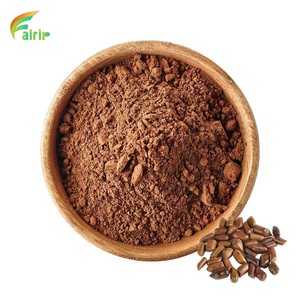
The botanical extract market has moved beyond raw plant powders toward standardized extracts verified by chromatographic profiling. OEM manufacturers specializing in herbal extracts—such as Cassia Seed, Ashwagandha, and Green Tea—utilize ultra-high performance liquid chromatography (UHPLC) to guarantee exact percentages of active marker compounds (e.g., anthraquinones, withanolides, EGCG) across every batch, eliminating seasonal potency variations.
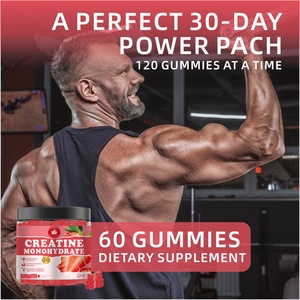
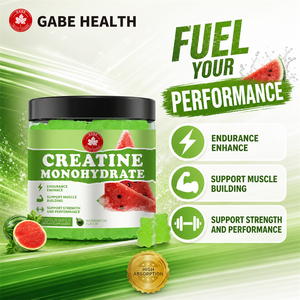
Confectionery delivery formats have expanded beyond simple multivitamins into performance nutrition and cognitive health. Formulating complex molecules like Creatine Monohydrate into a stable gummy matrix represents a significant chemical engineering achievement. Creatine tends to degrade into creatinine when exposed to high moisture and heat during traditional gummy cooking. Advanced starchless depositing lines operating at controlled micro-temperatures allow precise dosing of heat-sensitive sports nutrients while maintaining optimal shelf-life stability and desirable organoleptic profiles.
Everything you need to know about custom formulation, regulatory compliance, low MOQs, and bulk export logistics.
Scale your dietary supplement brand with reliable production schedules, full EU compliance, low MOQs, and proven international export expertise.
Contact Us