Explore production-proven stock formulations and raw material specs ready for brand labeling, low MOQs, and global export.
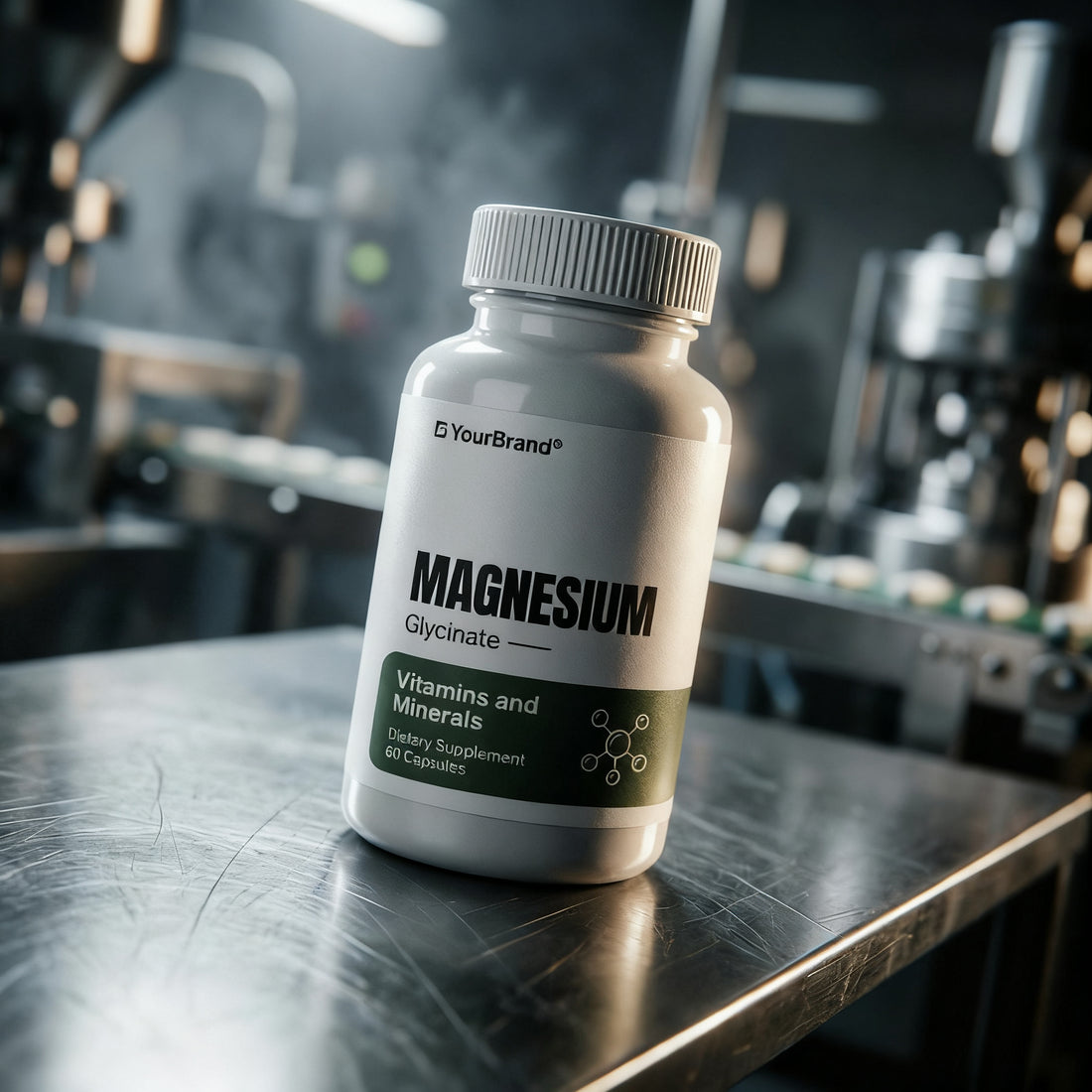
In the global nutraceutical and functional food landscape, Magnesium Glycinate (also known as Magnesium Bisglycinate) has emerged as the fastest-growing magnesium salt variant worldwide. Driven by consumer migration away from low-absorption inorganic forms (such as Magnesium Oxide and Magnesium Carbonate) and acidic organic salts (such as Magnesium Citrate), Magnesium Glycinate commands a dominant market share in premium sleep support, neuro-relaxation, somatic stress relief, and muscle recovery categories.
China remains the undeniable global powerhouse for raw material synthesis and contract finished-dose manufacturing of Magnesium Glycinate. Producing over 75% of the world's glycine raw material supply and possessing advanced, vertically integrated enzymatic chelation facilities, Chinese factories offer international brand owners, pharmaceutical buyers, and wholesale distributors unparalleled economies of scale, strict batch-to-batch consistency, and robust regulatory compliance.
To make informed procurement decisions, supply chain directors must master the stoichiometry of magnesium chelation. Chemically, one magnesium ion ($Mg^{2+}$) forms covalent-coordination bonds with two molecules of the amino acid glycine ($NH_2CH_2COOH$), resulting in a heterocyclic ring structure known as Magnesium Bisglycinate.
The theoretical maximum yield of elemental magnesium in a pure 1:2 molar ratio bisglycinate molecule is approximately 14.1% to 14.3%. When a supplier offers a powder claiming "30% or 40% elemental magnesium content" under the label of Magnesium Glycinate, it is chemically impossible for this material to be a pure chelate. Instead, it is a Buffered Blend where low-cost Magnesium Oxide ($MgO$, containing 60% elemental Mg) has been physically mixed into glycine or partially reacted.
| Parameters & Metrics | Fully Chelated Bisglycinate | Buffered Glycinate (Mg Glycinate + MgO) | Magnesium Oxide (Inorganic) | Magnesium Citrate (Organic Acid) |
|---|---|---|---|---|
| Elemental Mg Yield (%) | 11.5% - 14.3% | 18.0% - 30.0%+ | 58.0% - 60.0% | 11.0% - 16.0% |
| Oral Bioavailability | Very High (Dipeptide Pathway) | Moderate to Low | Extremely Low (~4%) | Moderate (~25%-30%) |
| Gastrointestinal Tolerance | Exceptional (Zero Laxative Effect) | Moderate GI Distress Risk | High Osmotic Laxative Effect | Mild Osmotic Laxative Effect |
| FTIR Spectral Peak Verification | Distinct C=O Shift at ~1600 cm⁻¹ | Mixed Peaks (Unbound MgO Presence) | No Glycine Ring Bands | Citrate Carboxylate Spectra |
| Water Solubility & pH | Complete Solubility (pH 9.5-10.5) | Insoluble White Residue / Turbid | Insoluble In Water | Soluble in Acidic Water |
| Bulk Density (g/ml) | 0.45 - 0.65 g/ml (Granular) | 0.65 - 0.85 g/ml | 0.30 - 0.90 g/ml | 0.60 - 0.80 g/ml |
Why Bioavailability Depends on Covalent Chelation: Pure Magnesium Bisglycinate does not ionize readily in the stomach's acidic environment. Because the magnesium ion is protected inside the heterocyclic ring formed by the two glycine molecules, it bypasses competition with other minerals (such as calcium or zinc) for divalent metal transporters (DMT1). Instead, it travels intact into the small intestine where it is absorbed directly via dipeptide channels (PEPT1). This mechanism ensures maximum systemic absorption without drawing water into the bowel or triggering osmotic diarrhea.
How leading global brands verify Chinese wholesale suppliers, conduct raw material analytical testing, and prevent supply chain vulnerabilities.
Standard Titration testing cannot distinguish between bound bisglycinate chelate and a physical mixture of glycine and magnesium oxide. Tier-1 Chinese manufacturers utilize Fourier Transform Infrared Spectroscopy (FTIR) and X-Ray Powder Diffraction (XRD) for every lot. Pure chelate shows a clear absorption band shift for the carboxylate group ($COO^-$) from $1700\text{ cm}^{-1}$ to approximately $1600\text{ cm}^{-1}$, confirming coordinate covalent bonding to the magnesium ion.
Because raw magnesium minerals originate from geological deposits, contamination by heavy metals is a critical risk factor. Premium China factories deploy Inductively Coupled Plasma Mass Spectrometry (ICP-MS) to guarantee safety thresholds well below USP and EU limits:
Unprocessed fine bisglycinate powder possesses poor flowability and low bulk density (~0.30 g/ml), causing severe sticking and weight variation on modern high-speed encapsulation machines (running at 100,000+ caps/hour). Top Chinese suppliers execute fluid-bed wet granulation to engineer High-Density Direct Compression Granules (0.55 - 0.70 g/ml), optimizing tableting speed and eliminating the need for synthetic lubricants or flow agents.
The global magnesium market is undergoing a seismic structural shift. Brands that adapt to modern consumer demands and evolving regulatory oversight will win significant market share. Here are the top trends shaping China's manufacturing landscape:
Next-generation OEM formulations are encapsulating Magnesium Glycinate inside phospholipid bilayer membranes (liposomes). This technology increases cellular uptake across lipid membranes and permits high-dosage liquid shots and stick packs without metallic or bitter off-tastes.
Single-ingredient supplements are increasingly being replaced by multi-pathway sleep complexes. Wholesale brands are securing custom contract manufacturing for blends combining Magnesium Glycinate + L-Theanine + Apigenin + Vitamin B6 (P5P), targeting GABA-A receptor activation and circadian rhythm regulation.
Leading Chinese chemical parks have implemented closed-loop water recovery and enzymatic synthesis lines for amino acid chelation. B2B buyers in the EU and UK can now request Carbon Footprint Documentation and zero-solvent synthesis certificates to align with corporate ESG goals.
Regulatory authorities in Europe (EFSA) and the UK (FSA) are intensifying enforcement against improperly labeled buffered magnesium. Brands sourcing from China must ensure that their supplier's Technical Dossier explicitly details the complete chelation process to prevent product recalls or customs detentions.
From custom formulation development to global delivery, our integrated supply chain eliminates intermediaries and guarantees uncompromised quality.
We provide full documentation for global compliance, including Certificate of Analysis (COA) for every batch, Heavy Metal & Microbiological reports, Flowcharts, Stability Test Data, Non-GMO verification, BSE/TSE Free statements, and Allergen declarations.
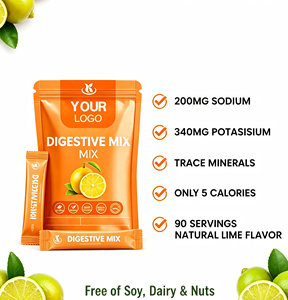
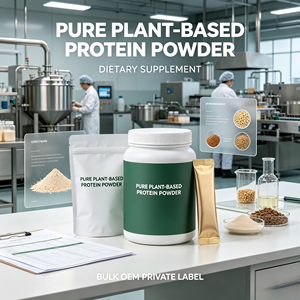
Whether your brand requires high-speed capsule filling (Size 0, 00, Veggie or Gelatin), powder blending in HDPE jars or eco-friendly pouches, stick pack sachets, or pectin-based functional gummies, our automated production lines deliver ready-to-shelf finished goods.
We accommodate both fast-growing digital brands validating new markets with low MOQs (from 500 units on stock formulas) and enterprise-level private label brands requiring multi-container bulk powder shipments with 3-5 week production lead times.
Clear, direct technical answers to assist procurement officers, QA personnel, and brand owners sourcing Magnesium Glycinate from China.
Partner directly with China's leading certified Magnesium Glycinate factory. Contact our technical sales team for bulk COAs, FTIR spectrum verification reports, custom OEM quotes, and fast air-shipped evaluation samples.
