Buying Private Label Herbal Extracts can look simple until a supplier’s glossy sample meets a real quality review. The bottle may show a familiar herb, yet its botanical identity, plant part, extraction ratio, and marker compounds still require verification. This is where practical experience matters.
Dr. Roy Upton, founder of the American Herbal Pharmacopoeia, has said, “You cannot test quality into a product. You have to build it in.” That principle should guide every private label decision. Ask for a complete certificate of analysis, not a single potency number. Review identity testing, microbial limits, heavy metals, pesticides, residual solvents, and stability data. Check whether the laboratory is independent and properly qualified. Small details matter.
Look closely at the extract itself. Is it powdery or sticky? Does the color match the specification? Does the package protect it from moisture, heat, and light? Confirm the Latin botanical name and plant part. A root extract is not automatically equivalent to a leaf extract. The distinction can affect consistency, labeling, and consumer expectations.
Supplier audits deserve attention too. Request traceability records, batch samples, manufacturing standards, and realistic lead times. Do not rely on impressive claims alone. They can be incomplete.
Some buyers focus too heavily on price. I have seen that mistake create expensive reformulation work later. A cheaper extract may have weaker documentation or inconsistent batches. No checklist removes every uncertainty. Still, these ten practical tips can help you compare suppliers carefully, reduce avoidable risk, and build a more trustworthy Private Label Herbal Extracts product.
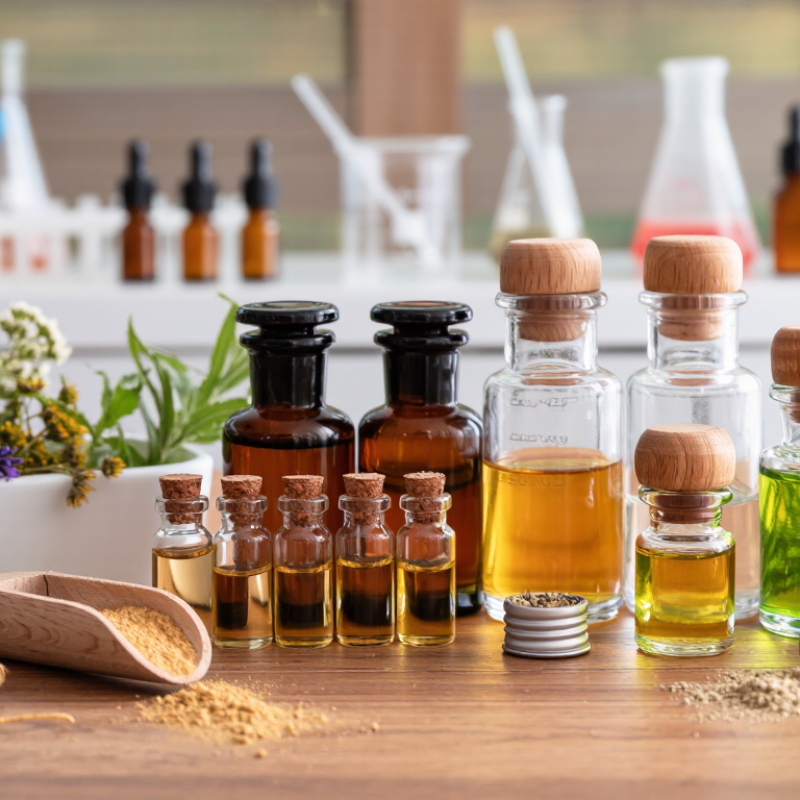
Private label herbal extracts are concentrated plant ingredients sold under a retailer’s own label. Their uses range from teas and capsules to functional foods and personal-care formulas. The right extract depends on the plant part, extraction solvent, marker compounds, and intended consumer use. A leaf extract is not automatically equivalent to a root extract.
Demand is substantial. The American Botanical Council’s HerbalGram market report estimated U.S. herbal supplement sales at about $12.6 billion in 2023, rising 4.4% from the previous year. The World Health Organization’s 2019 global report also found that 170 of 194 member states reported using traditional medicine. These figures show opportunity, but they do not prove that every extract is effective or suitable.
Quality needs evidence. Ask for botanical identity testing, batch-specific certificates of analysis, pesticide and heavy-metal results, microbial limits, and stability data. Check whether the stated marker compound matches the extraction method. A polished label can still hide weak documentation. That matters.
Suppliers should explain harvest location, processing temperatures, carrier ingredients, and allergen controls. Small details affect color, taste, solubility, and shelf life. Avoid disease-treatment claims unless qualified evidence and local rules support them. “Natural” is not a quality standard. Even experienced buyers can overvalue a high percentage of one compound while overlooking adulteration risks. Independent laboratory verification remains useful, though it adds cost and time.
Private-label herbal extract buying should begin with a product brief, not a supplier catalogue. Define the intended use, delivery format, dosage range, sensory profile, and target cost per serving. A capsule for older adults needs different testing than a powdered drink for active consumers. The World Health Organization’s Global Report on Traditional and Complementary Medicine 2019 states that 170 of 194 member states reported using traditional medicine. That signals broad interest, not automatic product-market fit. A first brief is rarely perfect.
Describe one primary customer, not everyone. Consider age, lifestyle, purchasing habits, and preferred format. For example, busy professionals may value single-serve sachets, while experienced supplement users may prioritize standardized potency. Interviewing even 10 to 15 potential buyers can reveal useful objections, such as bitterness, unclear dosage, or inconvenient preparation. Claims must remain evidence-based and appropriate for the intended market. Avoid promising dramatic results. That weakens trust.
Choose the extract type after defining the product goal. Compare whole-herb powders, concentrated extracts, and standardized extracts by marker compounds, extraction ratio, solvent, and stability. Grand View Research estimated the global botanical extracts market at USD 26.8 billion in 2022, with an expected 8.1% compound annual growth rate from 2023 to 2030. Growth increases supplier choice, but not necessarily quality. Request a current certificate of analysis showing botanical identity, marker content, microbial limits, heavy metals, pesticides, and residual solvents. A polished document is not enough. Independent verification may cost more, yet skipping it can create larger problems. I would also challenge my own assumptions: a higher marker level may not produce the best finished product.
Private label sourcing begins with evidence, not attractive packaging. The American Botanical Council’s 2023 Herb Market Report estimated U.S. herbal supplement sales at about $12.6 billion. That growth increases supplier pressure, and quality can vary.
Tip 1: Request the botanical name, plant part, country of origin, and extraction solvent.
Tip 2: Check whether the supplier provides batch-specific certificates of analysis. Generic documents are weak evidence.
Tip 3: Confirm identity testing, preferably with HPTLC, HPLC, or DNA methods when appropriate.
Tip 4: Ask for tests covering heavy metals, pesticides, microbes, and residual solvents.
Ingredients need traceability. WHO’s 2019 Global Report on Traditional and Complementary Medicine reported that 170 of 194 member states recognized traditional medicine use. Wider use makes authentication more important, not less.
Tip 5: Review harvest dates, lot codes, and chain-of-custody records.
Tip 6: Compare marker-compound results with the declared standardization.
Tip 7: Question unusually high potency claims.
I have seen impressive numbers hide poor testing details. That deserves reflection.
Manufacturing standards should be visible on paper and on the production floor.
Tip 8: Verify current Good Manufacturing Practice controls under applicable food or supplement regulations.
Tip 9: Request audit summaries, validation records, allergen controls, and cleaning procedures.
Tip 10: Order a small pilot batch before signing a large contract.
Inspect color, odor, solubility, and documentation together. An independent laboratory can retest the finished extract. Supplier certificates support decisions, but they do not replace your own verification.
Buying private label herbal extracts requires more than comparing price per kilogram. Ask for a recent certificate of analysis for every batch. It should identify the botanical species, plant part, extract ratio, and active compounds. Check results for microbial contamination, heavy metals, pesticides, and residual solvents. Independent laboratory testing adds useful distance from supplier claims. Still, one report never proves everything. Review the laboratory’s methods, accreditation, sample date, and lot number. A polished certificate can still be incomplete.
Certifications should match the product and destination market. Verify current GMP, food safety, organic, or allergen-control certificates through the issuing organization. Do not accept a logo alone. Packaging also deserves close inspection. Use food-grade containers with suitable moisture, oxygen, and light barriers. Seals should be intact. Each unit needs a lot code, net quantity, storage conditions, production date, and expiry date. Labels should state the botanical name, plant part, extract strength, serving information, allergens, and responsible business details. Avoid disease-treatment promises. Check local labeling rules before printing thousands of units. Regulations differ between markets. Mistakes become expensive quickly. Even experienced buyers can overlook a tiny warning statement or an unsuitable closure. Keep a written approval record, retain samples, and compare future batches against the original specification.
When buying private label herbal extracts, compare the complete cost, not only the quoted price per kilogram. Ask about extraction strength, packaging, testing, shipping, and setup charges. A low price may exclude batch-specific laboratory reports. Request a clear quotation with every fee listed. Check whether the supplier offers samples before a larger commitment. Small trials reduce expensive mistakes.
Minimum order quantities can shape your cash flow. Ask whether the MOQ applies to each extract, flavor, package size, or total order. A flexible pilot order is valuable for testing demand. However, very small orders may carry higher unit costs. Compare both scenarios. Do the math carefully. Lead times also need practical questions. Confirm production days, raw material availability, testing time, and shipping schedules. Seasonal herbs can create delays. Build extra time into your launch plan.
Reliable support often matters more than a polished sales presentation. Look for batch traceability, current certificates of analysis, stability information, and clear communication. Technical teams may help with dosage formats, label details, and storage guidance. Ask who answers quality questions after payment. In my experience, vague replies usually become slower later. I once underestimated packaging approval time, and the launch moved by several weeks. That mistake changed my checklist. Compare response speed, document accuracy, and problem-solving before signing. You should also review payment terms, replacement policies, and procedures for handling damaged or inconsistent goods. Clear support has measurable value.
| No. | Buying Tip | Typical Cost Range* | Common MOQ | Typical Lead Time | Support Service to Request | Practical Check |
|---|---|---|---|---|---|---|
| 1 | Define the extract specification first | Approximately US$20–$180 per kg for common powdered extracts, depending on plant, ratio, and standardization | 25–100 kg for stock items | 2–6 weeks | Specification sheet, botanical identification, extraction-ratio guidance | Confirm the Latin name, plant part, solvent, extract ratio, active marker, and carrier. |
| 2 | Compare total landed cost | Add freight, testing, packaging, customs, duties, and formulation charges to the quoted product price | Usually based on one production batch | Add 1–4 weeks for international logistics | Itemized quotation with Incoterms and shipping options | Request EXW, FOB, and delivered-cost comparisons using the same quantity and specification. |
| 3 | Check whether the MOQ fits your launch size | Small private-label runs may cost 10%–35% more per unit than larger batches | 500–2,000 finished units; 25–100 kg bulk extract | 4–10 weeks after artwork approval | Pilot-batch or mixed-MOQ program | Ask whether the MOQ applies per flavor, formula, package size, or total order. |
| 4 | Verify testing and traceability | Routine identity and microbiological testing often adds about US$50–$250 per batch; advanced testing costs more | One tested production lot | 3–10 business days for standard laboratory reports | Certificate of analysis, batch records, allergen and contaminant testing | Ensure the certificate matches the exact lot number shipped to you. |
| 5 | Evaluate formulation flexibility | Basic formula adaptation may be included; specialized development can range from US$300–$2,500 per formula | 500–3,000 units per formula | 6–12 weeks, including samples and stability review | Formulation, flavor masking, dosage, and compatibility support | Ask who owns the formula and whether revisions are included in the quoted fee. |
| 6 | Confirm packaging and labeling charges | Custom packaging commonly adds US$0.20–$2.00 per unit, excluding premium containers | 500–5,000 units per packaging format | 2–6 weeks for artwork, proofing, and packaging production | Artwork template, proof review, label compliance check | Check net weight, serving size, ingredient order, lot code, expiry date, and required warnings. |
| 7 | Review certifications relevant to your market | Certification, audit, and documentation fees may add 2%–10% to production cost | Depends on the certified production line | Additional 1–4 weeks when special documentation is required | GMP, HACCP, organic, non-GMO, vegan, or export documentation where applicable | Verify certificate scope, issuing body, validity period, and covered facility. |
| 8 | Plan samples and approval stages | Sample charges commonly range from US$30–$200 per formula, plus courier costs | 1–5 sample units before bulk production | 5–15 business days for standard samples | Retained samples, revision tracking, and written approval records | Approve appearance, taste, fill weight, packaging, and test results before production. |
| 9 | Compare standard and expedited lead times | Expedited production may increase manufacturing costs by approximately 10%–25% | Subject to available raw materials and packaging | Standard: 6–12 weeks; expedited: about 3–6 weeks when feasible | Production schedule, milestone updates, and delay notification process | Get the lead time in writing and clarify when the clock starts. |
| 10 | Assess after-sales and reorder support | Reorders are often 5%–20% less expensive when artwork, tooling, and formula are already approved | May decrease after the initial order, depending on inventory policy | Typically 4–8 weeks for repeat orders | Dedicated account contact, complaint handling, recall procedure, and forecast planning | Ask about shelf-life guarantees, replacement policy, retained samples, and reorder pricing. |
*Cost, MOQ, and lead-time figures are indicative planning ranges for private-label herbal extract projects. Actual values vary by botanical material, extract strength, testing requirements, packaging format, order volume, destination market, and shipping terms.
Define the intended use, delivery format, dosage range, sensory profile, and target cost per serving. A capsule for older adults may need different testing than a powdered drink. Start with the product goal.
Choose one primary customer instead of targeting everyone. Consider age, lifestyle, buying habits, and preferred format. Interview 10 to 15 potential buyers. They may mention bitterness, unclear dosage, or difficult preparation.
No. Define the product goal first. Then compare whole-herb powders, concentrated extracts, and standardized extracts. Review marker compounds, extraction ratios, solvents, and stability. That assumption may fail.
Request a current certificate of analysis for each relevant batch. It should show botanical identity, marker content, microbial limits, heavy metals, pesticides, and residual solvents. A polished document is not enough. Independent verification may provide stronger confidence.
Compare the complete cost, not only the price per kilogram. Include extraction strength, packaging, testing, shipping, and setup charges. Ask whether batch-specific laboratory reports cost extra. Do the math.
Minimum order quantities can affect cash flow and storage needs. Ask whether the minimum applies to each extract, flavor, package size, or total order. Compare a flexible pilot order with a larger purchase. Start small.
Ask about production days, raw material availability, testing time, and shipping schedules. Seasonal herbs may cause delays. Leave extra time before launch. A missed packaging approval once delayed a launch by several weeks.
Check batch traceability, stability information, document accuracy, and communication speed. Ask who handles quality questions after payment. Also review payment terms, replacement policies, and damaged-goods procedures. Vague replies may become slower later.
Buying Private Label Herbal Extracts requires careful planning, from selecting the right extract to preparing a product that meets customer expectations. Start by defining your product goals, target audience, preferred format, and intended use. Then evaluate potential suppliers by reviewing ingredient quality, sourcing transparency, manufacturing practices, and consistency. A reliable supplier should provide clear documentation, batch testing, and appropriate certifications to support product safety and quality.
Before placing an order, review packaging options, label information, storage requirements, and any applicable market regulations. Compare total costs rather than focusing only on the unit price, including minimum order quantities, customization fees, shipping, and future reordering expenses. Lead times and communication support are also important, especially when developing a new product. By assessing suppliers, testing standards, packaging, pricing, and service together, buyers can make informed decisions and build a dependable herbal extract product line.